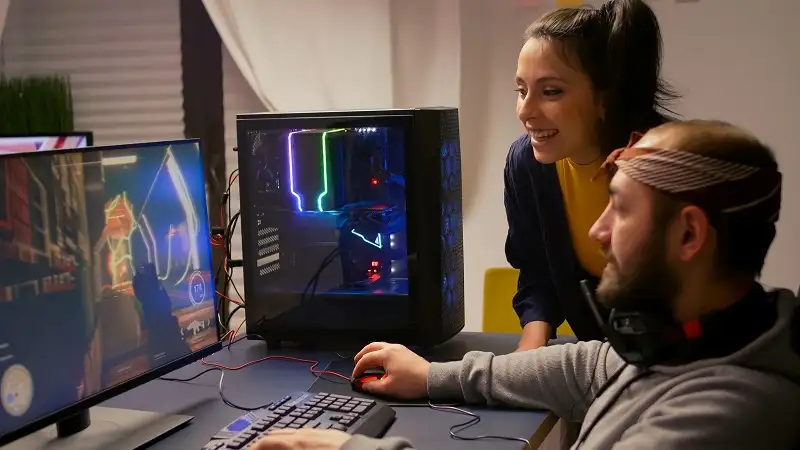
The landscape of game design is evolving at an unprecedented pace. As technology advances, we are witnessing a dramatic transformation in how games are conceptualized, developed, and experienced. From immersive worlds powered by artificial intelligence to hyper-realistic visuals enabled by next-generation rendering engines, emerging technologies are revolutionizing game design in profound and measurable ways.
In this comprehensive guide, we explore the cutting-edge innovations shaping the future of interactive entertainment and examine how we can harness these technologies to redefine gameplay, storytelling, and player engagement.
Artificial Intelligence Redefining Gameplay Mechanics
Artificial Intelligence (AI) has become one of the most impactful forces in modern game development. We are no longer limited to scripted non-playable characters (NPCs) with predictable behaviors. Instead, AI-driven systems create adaptive, responsive environments that evolve based on player actions.
Procedural Content Generation
Procedural generation allows developers to create vast, dynamic worlds using algorithms rather than manual design. Games now feature:
- Expansive open worlds generated in real time
- Dynamic mission structures
- Adaptive enemy strategies
- Randomized loot and environment variations
This technology significantly reduces development costs while increasing replayability and immersion.
Behavioral AI and Smart NPCs
Advanced machine learning models allow NPCs to learn from player behavior. Enemies adapt tactics, allies make intelligent decisions, and environments react organically. This creates gameplay experiences that feel alive and unpredictable.
Virtual Reality and Augmented Reality Transforming Immersion
Virtual Reality (VR) and Augmented Reality (AR) are reshaping player interaction. Immersion is no longer confined to a screen; we now step directly into digital worlds.
Full Immersive VR Environments
VR systems enable:
- 360-degree interactive environments
- Motion-tracked controls
- Realistic spatial audio
- Physical movement integration
These technologies create deeply engaging simulations for gaming, training, and social interaction.
Augmented Reality Integration
AR overlays digital content onto the real world. By combining real-world environments with interactive digital assets, developers create hybrid gameplay experiences that bridge physical and virtual spaces.
Cloud Gaming and Streaming Infrastructure
Cloud computing has removed hardware limitations that once constrained game design. Players no longer need high-end consoles or gaming PCs to access graphically intensive experiences.
Server-Side Rendering and Low Latency
Cloud gaming platforms leverage powerful remote servers to process graphics and stream gameplay in real time. This enables:
- Instant access to large game libraries
- Cross-device compatibility
- Reduced hardware barriers
- Continuous updates without manual downloads
The democratization of gaming through cloud technology expands global access and reshapes distribution models.
Real-Time Ray Tracing and Advanced Graphics Engines
The visual fidelity of modern games is reaching cinematic standards. Real-time ray tracing simulates how light interacts with surfaces, producing realistic reflections, shadows, and global illumination.
Physically Based Rendering (PBR)
PBR techniques allow materials to behave according to real-world physics. Textures respond dynamically to lighting conditions, creating stunning realism.
Next-Generation Engines
Modern game engines integrate advanced rendering pipelines, AI tools, and physics systems into unified frameworks. Developers now build vast worlds with higher detail, better performance optimization, and shorter production cycles.
Blockchain Technology and Digital Asset Ownership
Blockchain has introduced secure digital ownership into gaming ecosystems. This technology allows players to truly own in-game assets through decentralized ledgers.
Non-Fungible Tokens (NFTs) in Gaming
NFTs enable:
- Verifiable digital ownership
- Transferable in-game items
- Player-driven economies
- Cross-platform asset interoperability
This transforms traditional monetization models and empowers player participation in virtual economies.
Haptic Feedback and Sensory Technologies
Beyond visuals and sound, game design now incorporates tactile sensations. Haptic technologies simulate physical interactions to increase immersion.
Advanced Controllers and Wearables
Modern devices offer:
- Vibration intensity variation
- Trigger resistance feedback
- Environmental sensation simulation
These enhancements allow players to feel tension, recoil, impact, and environmental elements in real time.
Motion Capture and Performance Digitization
Realistic character animation has evolved through advanced motion capture systems. Actors’ performances are now captured with exceptional precision and integrated directly into game engines.
Facial Capture and Emotional Realism
High-resolution facial scanning captures micro-expressions, delivering emotionally authentic characters. This dramatically improves narrative immersion and player connection.
5G Connectivity and Multiplayer Expansion
The global rollout of 5G networks supports ultra-low latency connections, which enhances multiplayer experiences and real-time interactions.
Massively Multiplayer Environments
With faster connectivity, developers can support:
- Larger player populations
- Seamless real-time synchronization
- Cloud-based world persistence
- Competitive esports scalability
This creates expansive, socially interactive gaming ecosystems.
Cross-Platform Development and Unified Ecosystems
Modern development frameworks allow seamless cross-platform compatibility. Players can access the same game across consoles, PCs, and mobile devices.
Shared Progression Systems
Cloud-based accounts synchronize progress, achievements, and purchases across devices. This unified experience strengthens user retention and accessibility.
Data Analytics and Player Personalization
Big data analytics empower developers to refine gameplay experiences continuously.
Player Behavior Tracking
Developers analyze:
- Engagement patterns
- Skill progression
- Drop-off points
- Purchase behavior
This enables precise balancing, targeted updates, and customized content delivery.
Edge Computing and Latency Optimization
Edge computing reduces latency by processing data closer to the player. This significantly enhances responsiveness in real-time games.
Low latency is especially critical in competitive and fast-paced genres, where milliseconds impact outcomes.
Extended Reality (XR) Convergence
The convergence of VR, AR, and Mixed Reality (MR) into Extended Reality (XR) marks a significant shift in interactive experiences.
XR integrates physical and digital interactions into seamless experiences, expanding the scope of game design beyond traditional boundaries.
Sustainable Game Development Technologies
Energy-efficient hardware and optimized engines are reducing environmental impact. Developers now prioritize:
- Cloud efficiency
- Energy-conscious server architecture
- Sustainable production pipelines
Green technology integration represents the future of responsible digital entertainment.
Adaptive Audio and Spatial Sound Engineering
Modern audio engines create immersive 3D soundscapes. Spatial audio allows players to detect directional cues accurately, enhancing realism and competitive awareness.
Dynamic audio systems respond to environmental changes, player position, and narrative events.
Neural Networks and Procedural Animation
Neural networks are now generating realistic character animations without manual rigging for every movement.
This technology supports:
- Natural locomotion
- Realistic crowd simulations
- Adaptive character reactions
- Efficient development pipelines
Procedural animation enhances both realism and scalability.
Cybersecurity and Secure Gaming Ecosystems
As gaming ecosystems expand, security becomes paramount. Advanced encryption and anti-cheat technologies protect player data and competitive integrity.
Secure architecture ensures trust, especially in online multiplayer environments and blockchain-integrated platforms.
The Future of Game Design Innovation
We stand at the intersection of creativity and technological acceleration. The integration of AI, VR, blockchain, advanced graphics, cloud computing, and high-speed connectivity is fundamentally reshaping the industry.
Emerging technologies are not merely enhancing visuals or performance—they are redefining storytelling, gameplay depth, economic systems, and global accessibility.
By embracing these innovations strategically, we unlock limitless possibilities for interactive entertainment. The next generation of games will be:
- Smarter
- More immersive
- More inclusive
- More dynamic
- More interconnected
The evolution of emerging technologies revolutionizing game design continues to accelerate, setting new standards for engagement and innovation.